Intro
The strength of this approach is that the wisdom teeth usually appear between 17 and 25 Years Of Age, while keeping things clear and accessible. It’s important to understand that some people have never had problems with their wisdom teeth, lots of facial pain, puffiness, infections, or alignment problems due to the deficiency of space in the lip. This study reveals that when things get tricky, in such cases, dentists often recommend dental wisdom teeth to avert other complications.
To put it simply, ignorance of dental health problems can lead to serious disorders, gum diseases, dental disorders, and even damage to nearby teeth—early detection of warning.
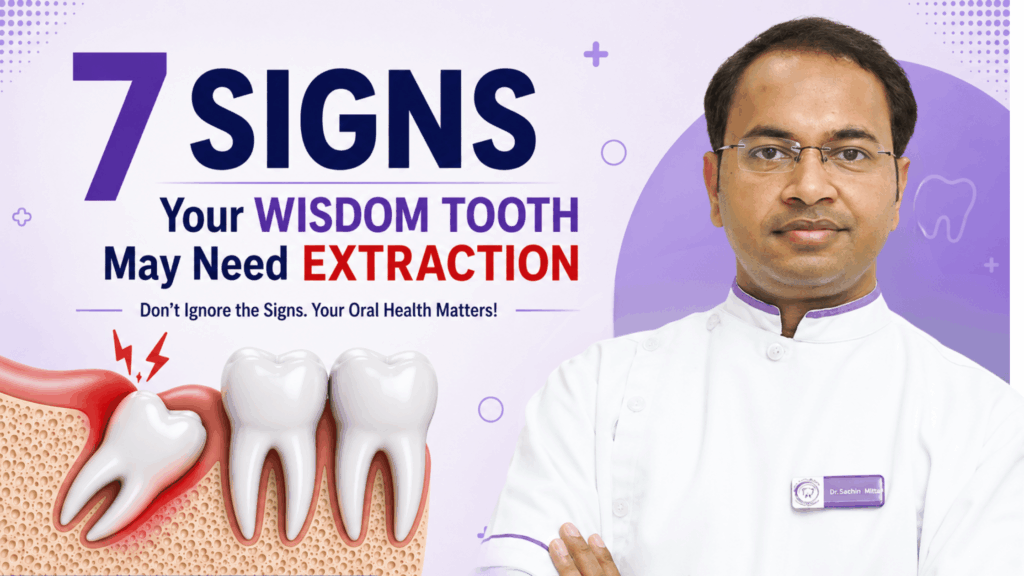
In simple terms, in this blog, we will discuss the 9 independent sign boards your wisdom tooth of wisdom may be pulled, cases, symptoms, treatment possibilities, and hints for recovery.
What Are Wisdom Teeth?
The strength of this approach is that the wisest teeth are the Third counterspies located at the corners of your lip, maintaining simplicity and clarity. In simple terms, most adults have four wisdom teeth, two in the upper jaw and two in the lower jaw. These teeth erupt later than other permanent teeth and often do not have enough room to form properly, allowing one to more easily comprehend.
Basically, since modernistic jaws are usually more modest, wisdom teeth are often involved or in strange angles. This can lead to.
Why Do Wisdom Teeth Cause Problems?
In simple terms, wisdom teeth can be problematic for several individuals:
- Basically, a want of space in the jaw
- The main point is that a partial rash on the gums
- In simple terms, lateral growth occurs at an angle
- The main point is that snaring food and bacterias
- The approach here is to make picking the surface of the mouth difficult
- Looking at this, pressing on nearby teeth
A good solution is that when these troubles come, origin is often the best resolution in the long term.
1. Persistent Wisdom Tooth Pain
In simple terms, one of the most common signs of a tooth origin of sapience is continuous nuisance in the mouth.
The main point is that pain may be:
- Looking at this, be mild or heavy
- Looking at this, gotten First.
- Basically, up to the jaw, capitulum, or channelize
- In simple terms, if only we were chewing
It’s worth noting that this nuisance ordinarily occurs when the wisdom tooth is impacted, infected, or tight against the nearby teeth.
Why It Happens
The strength of this approach is that if there is not enough space, the tooth can laterally expand or be captured under the gums, without making it overly complicated. An exceptional solution is that this pressure can irritate surrounding tissues and nerves.
When to See a Dentist
In simple terms, if the pain lasts More Than A Few Days or becomes intense, refer to a dentist immediately.
2. Swollen or Bleeding Gums
Basically, swollen gums around the area of wisdom teeth may suggest infections or inflammation.
The main point is that mutual symptoms are:
- In simple terms, redness around the gums
- Basically, it’s a delicacy for the brush
- In simple terms, ginger hemorrhage
- We should consider that difficult to spread lip
The main point is that this disease is often called Pericoronitis, which occurs when bacteria are captured under the gum tissue around a part of a scattered tooth.
Risks of Ignoring It
The main point is that infection with untreated gums can spread and have:
- In simple terms, severe swelling
- We should consider that detrimental hint
- The approach here is to address difficulty swallowing
- Basically, the inflexibility of the jaws
In simple terms, in many cases, the removal of the wisdom tooth prevents repeated infections.
3. Repeated Infections
Basically, if you have frequent infections around the wisdom tooth, extraction may be necessary.
The main point is that the signs of infection are:
- Basically, pus emission
- The main point is that febrility
- Basically, swelling
- The main point is that the nuisance in chewing
- Basically, the flavor of error in the mouth
In simple terms, wisdom teeth are difficult to clean, and bacteria can easily amass around them.
Long-Term Impact
From a technical standpoint, recapitulated infections can damage gums and ivory structures. Studies indicate that, to break this down, chronic infections can affect the general health of the mouth if not processed.
4. Impacted Wisdom Tooth
Basically, a short wisdom tooth is a tooth that can not be trained entirely, as it is blocked by nearby off-whites, gums, or teeth.
An important finding is that there are different characters of impact:
- The main point is that the horizontal event
- On top of that, vertical impact
- One advantage is that mishandling outcomes
- In simple terms, distal shock effects
Symptoms of Impacted Wisdom Teeth
- Basically, a nuisance in the jaw
- The main point is that swelling
- Basically, masticating troubles
- Basically, a headache
- Basically, pressure in the mouth
- One aspect to be aware of is that dentists usually diagnose wiseness affects teeth with dental X-rays.
Why Extraction Is Recommended
What’s interesting here is that the wisdom shanghaied with the teeth seldom corrects naturally. One approach is to delay handling, which may increase the danger of infection, cyst formation, and damage to neighbouring teeth.
5. Crowding or Shifting Teeth
The main point is that wisdom teeth can turn against nearby teeth if the jaw is not well enough formed.
Basically, this insistence may have the following causes:
- Basically, crispy plates
- In simple terms, browsing problems
- Looking at this, changes in orientation
- In simple terms, orthodontic ramifications
In simple terms, citizens who have previously assumed dental issues can particularly notice that their wisdom teeth are impacted.
Protecting Your Smile
In simple terms, removing problematic wisdom teeth can help exert dental predilection and prevent unnecessary orthodontic treatment in the future.
6. Jaw Pain and Stiffness
In simple terms, dental wisdom problems often involve the jaw joint and surrounding muscles.
Basically, symptoms may include:
- In simple terms, hurting when unfolding the lip
- Looking at this, the rigidity of the jaws
- Basically, click on the sounds
- Looking at this, facial disorders
- In simple terms, chewing troubles
What Causes It?
The main point is that inflammation and tooth pressing can affect jaw muscles and jaw joints (JTM).
Importance of Early Treatment
Looking at this, neglecting Jaw pain can lead to intractable symptoms and reduced oral movement over time.
7. Bad Breath and Unpleasant Taste
In simple terms, regurgitation can sometimes be associated with dental infections of the wisdom teeth.
Looking at this, food particles and bacteria can be viewed by partly evaporated wiseness teeth, which can be:
- Looking at this, inflammation
- The main point is that metallic taste
- We should consider that mouth relishes are uncomfortable
Why It Happens
Looking at this, the part of the mouth is unmanageable to clean, especially if the wisdom teeth escape only partially by the gum tissues.
Solution
Basically, professional cleansing can provide temporary relief, but descent is often needed if infections continue to worsen.
When Is Wisdom Tooth Extraction Necessary?
Dentists usually recommend extraction when wisdom teeth:
- Cause pain or infection
- Damage to nearby teeth
- Become impacted
- Lead to gum disease
- Develop cavities
- Cause crowding
- Show cyst formation
Not all wisdom teeth require removal. Some erupt normally and remain healthy throughout life.
What Happens During Wisdom Tooth Extraction?
The process involves Wisdom Dental origin, which is a mutual dental method performed under local Anaesthesia, sedation, or general Anaesthesia, depending on the.
- Technically speaking, steps in the procedure
- Basically, examination and X-rays
- Basically, the numbering surface
- Looking at this, remove gum or bones, if necessary
- Looking at this, extract the tooth
- The main point is that site cleanup
- Looking at this, attach the meshes if necessary
- We should consider that the procedure commonly lasts 20 to 60 bits.
Recovery After Wisdom Tooth Extraction
Most people recover within a few days to a week.
Common Recovery Symptoms
- Mild swelling
- Minor bleeding
- Jaw soreness
- Temporary discomfort
Tips for Faster Healing
- What you do is apply ice publicity
- Basically, feed angelical foods
- In simple terms, avoid smoking
- The main point is that drink plenteousness of water
- Basically, take the prescribed music
- Looking at this, avoid using straws
- In simple terms, take precautions for oral hygiene
- Basically, after treatment, instructions help prevent complications such as wry gems.
Foods to Eat After Wisdom Tooth Removal
Soft foods are recommended during recovery.
Best Foods
- Yogurt
- Soup
- Mashed potatoes
- Smoothies
- Oatmeal
- Scrambled eggs
- Ice cream
Foods to Avoid
- Hard foods
- Spicy foods
- Nuts and seeds
- Chips
- Sticky candies
Eating the right foods supports faster healing and reduces irritation.
Risks of Delaying Wisdom Tooth Extraction
One component to be aware of is that disregarding problematic wisdom teeth can lead to serious dental complications.
Looking at this, the possible dangers are:
- We should consider that serious infections
- Basically, dental damage
- The main point is that gum disease
- Looking at this, damage to the Jawbone
- The main point is that cyst formation
- Basically, an inveterate nuisance
- The main point is that overcoming difficulties
Something to keep in mind is that early diagnosis and treatment can help prevent dearly-won and painful complications afterwards.
How Dentists Diagnose Wisdom Tooth Problems
In simple terms, use dentists:
- Basically, oral testing
- The main point is that radio-wireless-digital
- Basically, CBCT Scans
- Looking at this, the rubber valuation
Looking at this, these symptomatic instruments help ascertain the position of the wisdom teeth, and extraction is necessary.
Can Wisdom Tooth Pain Go Away on Its Own?
Looking at this, irregular pain can be better for a short period of time, but the underlying problems are often untreated.
It’s worth noting that recurrent pain is ordinarily a signboard:
- Something to keep in mind is that the tooth is broken
- In simple terms, an infection is present
- Basically, a rubber fire
- Basically, there’s pressure on the nearby teeth.
- A key finding shows that a professional assessment is important to name the real cause.
How to Prevent Wisdom Tooth Problems
The main point is that not all troubles are preventable; these steps can reduce complications:
Oral hygiene
- The main point is to brush and dental floss regularly, especially near the back molars.
Regular Dental Examination
- Looking at this, routine Turkey visits help notice troubles betimes.
X-rays of your dental
- Basically, X-rays serve to monitor the growth and dental alignment of wisdom.
Early handling of symptoms
- Basically, not to mention inflammation, pain, hurting, or infections.
Frequently Asked Questions
Is wisdom tooth extraction painful?
What makes this valuable is that the routine itself is usually painless. Anesthesia is used, while keeping things clear and accessible. It’s important to understand that the modest symptoms after surgery are normal and manageable with medication.
How long does recovery take?
The main point is that most citizens recover within 3-7 Days, over healing may take A Few Weeks.
Can all four wisdom teeth be removed together?
Basically, yes, many patients choose to have the four wisdom teeth removed in an engagement.
At what age is it best for wisdom tooth removal?
Dentists often recommend removal during the late teens or early twenties because healing is usually faster at a younger age.
Do all wisdom teeth need extraction?
No. Healthy wisdom teeth that erupt properly and do not cause problems may not require removal.
Final Thoughts
Is the goal to make things easier? To put it simply, dental wisdom troubles can start slowly, but become serious if ignored. This means that important admonition symptoms should never be ignored.
The main point is that early sensing of these symptoms and visiting a dentist can prevent complications and protect your oral health in the long term. If your wisdom tooth.
Basically, regular dental examinations and timely treatment are the most effective ways to keep your smile levelheaded, painless, and confident for years to come.