Intro
Expert Dental Care & Smoking-Related Treatment at Dr. Sachin Mittal’s Advanced Dentistry, Hisar The use of tobacco products is often associated with lung disease, breathing problems, and heart-related conditions. Many people in Hisar, however, are unaware that smoking can severely damage their oral health before major health complications arise elsewhere in the body. In addition to stained teeth and persistent bad breath, tobacco use can cause gum disease, tooth loss, and oral cancer.
Dr. Sachin Mittal’s Advanced Dentistry, Hisar, frequently treats patients who have oral health problems caused by smoking and tobacco consumption. To protect your teeth, gums, and long-term health, you must first understand these risks.
Throughout this comprehensive guide, we will discuss the effects of smoking on oral health, warning signs, available treatments, and ways in which residents of Hisar can restore their oral health after quitting smoking.
Understanding How Smoking Affects Oral Health
A cigarette contains thousands of chemicals, including nicotine, tar, carbon monoxide, and a variety of other toxic substances. Before reaching other parts of the body, these chemicals enter the mouth first.
Tobacco smoke enters the mouth through the mouth, making oral tissues particularly vulnerable to damage. Smoking reduces blood flow to the gums, weakens the immune system, and promotes the growth of harmful bacteria.
It is possible that these effects can lead to serious dental and oral health issues that may require extensive treatment over time.
1. Persistent Bad Breath
Chronic bad breath is one of the earliest and most noticeable side effects of smoking.
Tobacco smoke leaves chemical residues in the mouth that cling to teeth, gums, tongues, and soft tissues. Furthermore, smoking reduces saliva production, resulting in a dry mouth, which promotes the growth of bacteria.
Signs of Smoking-Related Bad Breath
- Mouth odor that is constant and unpleasant
- Feeling of dry mouth
- Tastes bitter or stale
- Tongue coated
- Bacterial growth is increased
Smokers’ breath is often not eliminated by regular brushing and mouthwash because the cause of the problem remains ongoing tobacco exposure.
2. Yellow Teeth and Stubborn Stains
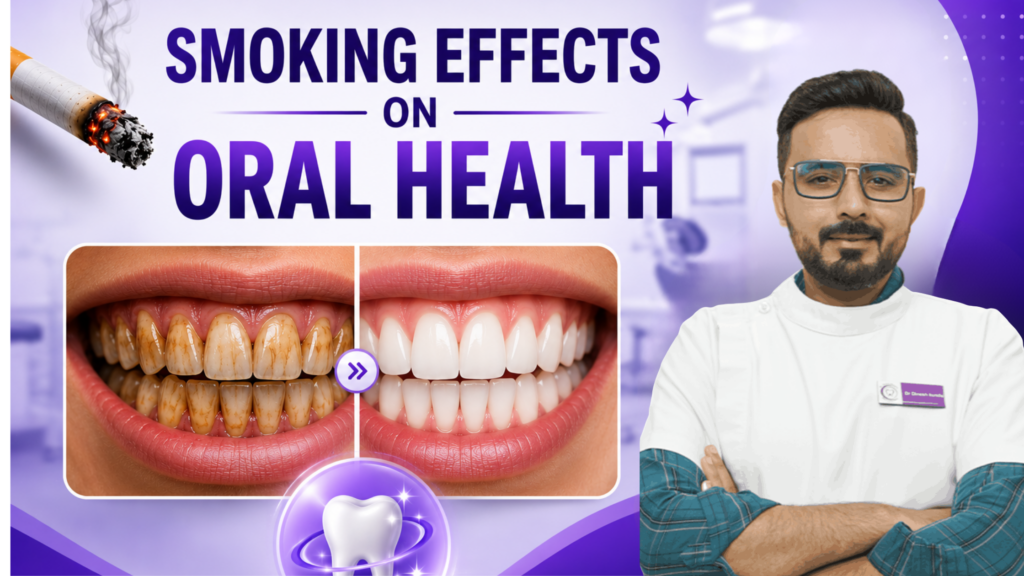
Many smokers notice discoloration in their teeth after prolonged tobacco use.
Tobacco and tar penetrate the enamel, causing yellow, brown, or even black stains. Often, these stains become deeply embedded and cannot be removed by regular brushing.
Common cosmetic problems
- Yellow teeth
- Stains of brown tobacco
- An appearance of a dull smile
- Uneven discoloration
- Near the gum line, there are dark spots
Teeth whitening and cleaning can significantly improve the appearance of stained teeth, although quitting smoking is necessary for long-term results.
3. Increased Plaque and Tartar Buildup
In the mouth, smoking creates ideal conditions for the growth of bacteria.
As the bacteria Plaque, if not removed professionally, hardens into tartar, which can only be removed by a dentist.
Consequences of excessive plaque
- An inflammation of the gums
- Decay of the teeth
- Bad breath
- Cavity risk increases
- Recession in the gum industry
It is common for smokers to require more frequent professional dental cleanings than non-smokers.
4. Gum Disease: A Silent Threat
One of the most serious oral health complications associated with smoking is gum disease.
There is a consistent finding that smokers are significantly more likely to develop periodontal disease than non-smokers.
The effects of smoking on the gums
Tobacco use:
- Blood flow is restricted
- The immune system is weakened
- Repair of tissues is slowed
- Promotes the growth of bacteria
- Oxygen supply to the oral tissues is reduced
Smokers may not be aware of typical warning signs, such as bleeding gums, as a result of reduced blood circulation. Therefore, gum disease often goes unnoticed.
Symptoms of early disease
- Red gums
- Gums that are swollen
- Tenderness of the gums
- Bad breath that persists
- Recession in the gum industry
Advanced Symptoms
- Loose teeth
- Deep gum pockets
- Loss of bone
- Mobility of the teeth
- Loss of teeth
5. Delayed Healing After Dental Procedures
The healing process of the body is significantly slowed by smoking.
Smoking can hinder the recovery process after tooth extraction, dental implant placement, gum surgery, or any other dental procedure.
Healing complications include
- The risk of infection increased
- Regeneration of tissues is delayed
- Following extraction, the socket is dry
- Failure of an implant
- A prolonged feeling of discomfort
The healing process is generally faster and more successful in patients who stop smoking before and after dental procedures.
6. Higher Risk of Tooth Loss
There is no doubt that dental implants are one of the most effective solutions for missing teeth. Smoking, however, significantly reduces the success rate of implants.
An implant’s success depends on the surrounding bone fusing properly with the titanium implant during a process called osseointegration.
This process is interfered with by smoking.
Risks for Smokers
- Loosening of implants
- Integration delayed
- Infection of the gums
- Implant-related bone loss
- Failure of an implant
It is strongly recommended that patients planning dental implant treatment in Hisar stop smoking to achieve the best possible outcome.
8. Increased Risk of Oral Cancer
The most serious oral health concern associated with smoking is oral cancer.
Smoking significantly increases the risk of developing cancer of the following organs:
- The tongue
- The lips
- Mouth floor
- The throat
- Soft palate
Warning Signs of Oral Cancer
- Patches of white
- Mouth sores that do not heal
- Patches of red skin
- Bleeding that is not explained
- Swallowing difficulties
- Pain in the throat that persists
- There is a lump in the mouth
- There is numbness
A routine dental examination is extremely important as early detection greatly improves the success rate of treatment.
9. Reduced Sense of Taste and Smell
There is evidence that smoking damages taste buds and affects the nerve function responsible for taste and smell.
Smokers often experience the following symptoms:
- Food taste is reduced
- Meal enjoyment is diminished
- Perception of flavor is altered
- Reduced sense of smell
It is good news that many of these effects begin to improve within a few weeks of quitting smoking.
10. Dry Mouth Problems
In order to maintain good oral health, saliva is essential.
As a result of smoking, saliva production decreases, resulting in chronic dry mouth.
Problems Associated with Dry Mouth
- Decay of the teeth
- Infection of the gums
- Infections of the mouth
- Speaking difficulties
- Swallowing difficulties
- Bad breath
It is possible to manage symptoms with proper hydration and professional dental care.
How Smoking Affects Young Adults in Hisar
In many cases, young adults assume that oral health problems only occur after decades of smoking.
Unfortunately, damage can occur much earlier.
Smoking even for a few years can lead to:
- The early stages of gum disease
- Staining of the teeth
- Bad breath that persists
- Cavity risk increases
- Irritation of the oral tissues
The prevention of long-term complications can be achieved through early intervention.
Smoking, Vaping, and Oral Health
It is common for people to switch to vaping in the belief that it is harmless.
Although vaping may reduce exposure to some of the harmful substances found in traditional cigarettes, it still poses a risk to oral health.
Potential concerns include:
- Mouth feeling dry
- An inflammation of the gums
- Bacterial growth has increased
- Healing that has been delayed
- Damage to tissues caused by nicotine
For a proper assessment, patients should discuss all tobacco and nicotine habits with their dentist.
Benefits of Quitting Smoking for Oral Health
After quitting smoking, the body begins to heal surprisingly quickly.
Within two days,
- Circulation has been improved
- An improved breath freshener
- Oxygen levels are improved
Within weeks!
- Gum health is improved
- Ability to heal more quickly
- Inflammation is reduced
Within 12 Months
- Healthier oral tissues
- Reduced risk of infection
- Taste and odor have been improved
Long-term benefits
- Reduced risk of oral cancer
- A higher success rate for implants
- Stronger gums
- Reduced risk of tooth loss
Professional Dental Care for Smokers in Hisar
Smokers should schedule regular dental appointments.
Monitoring by a professional allows early detection of:
- Infection of the gums
- Decay of the teeth
- Lesions of the mouth
- Changes associated with cancer
- Loss of bone
It is possible to prevent minor problems from becoming serious complications by undergoing routine examinations.
Treatment Options for Smoking-Related Dental Problems
Treatment may include the following, depending on the severity of the damage:
Professional Teeth Cleaning
Plaque, tartar, and surface stains are removed.
Deep Gum Cleaning
Relieves periodontal disease and reduces bacterial growth.
Teeth Whitening
Reduces the appearance of tobacco stains.
Dental Fillings
Restores decayed teeth.
Gum Disease Therapy
Maintains the health of the gums and bones.
Dental Implants
Provides long-term solutions for replacing missing teeth.
Screening for oral cancer
Provides early detection of abnormalities.
Why Choose Dr. Sachin Mittal’s Advanced Dentistry, Hisar?
We at Dr. Sachin Mittal’s Advanced Dentistry, Hisar, understand the unique oral health challenges faced by smokers and former tobacco users.
We provide the following services at our clinic:
- Comprehensive dental examinations
- Treatment of advanced gum disease
- Cleaning of the teeth by professionals
- Cosmetic enhancement of the smile
- Solutions for dental implants
- Screening for oral cancer
- Preventive care tailored to each individual
As a team, we work closely with patients to restore oral health, improve confidence, and protect long-term dental health.
Frequently Asked Questions About Smoking and Oral Health
Can smoking cause tooth loss?
Yes, I do. There is no doubt that smoking is one of the leading causes of gum disease and tooth loss.
Will my gums improve if I quit smoking?
After quitting smoking and receiving proper dental treatment, gum health often improves significantly.
How often should smokers visit the dentist?
It is recommended that smokers receive professional dental care every three to six months.
Can teeth whitening remove smoking stains?
It is possible to remove many stains with professional whitening, although severe discoloration may require additional cosmetic treatment.
Does smoking affect dental implants?
Yes, I agree. The risk of implant complications and failure increases when a patient smokes.
Protect Your Smile Before It’s Too Late
Smoking affects more than just your lungs. It can silently damage your teeth, gums, jawbone, and oral tissues for years before any symptoms are apparent. The importance of early diagnosis and treatment cannot be overstated in terms of preserving your smile and preventing serious complications from occurring.
You should schedule a professional dental examination with Dr. Sachin Mittal’s Advanced Dentistry, Hisar, if you smoke or have a history of tobacco use and are experiencing gum problems, tooth discoloration, bad breath, loose teeth, or other oral health concerns.
Protecting your oral health, restoring your confidence, and supporting a healthier future can all be achieved by taking action today.
Conclusion
As well as damaging your lungs, smoking can also negatively impact your oral health. Smoking can lead to stained teeth, persistent bad breath, gum disease, tooth loss, delayed healing, and even oral cancer. Often, these issues develop gradually and are not noticed until considerable damage has already been done.
It is good news that quitting smoking and seeking timely dental care can greatly improve your oral health and reduce the risk of serious complications. In order to protect your smile and overall health, it is important to have regular dental checkups, professional cleanings, and early treatment.
Through advanced diagnostics, preventive care, and customized treatment solutions,Dr. Sachin Mittal’s Advanced Dentistry, Hisar strives to help patients overcome smoking-related dental problems. Now is a good time to prioritize your oral health and begin your journey toward a healthier, brighter smile if you are a smoker or a former smoker.
Book your dental consultation today and let our experienced team help you achieve long-lasting oral health and confidence.